
The Ultimate Lawn Care Schedule for Homeowners
A beautiful, healthy lawn doesn’t happen by accident. With the right timing and consistent care, your grass can thrive through


If your lawn is thinning, turning straw-brown, or feeling dry despite regular watering, chinch bugs may be the hidden cause. These tiny but highly destructive lawn pests feed on grass blades by piercing them and extracting essential fluids. As they feed, they inject toxins that disrupt the plant’s ability to transport water and nutrients — causing visible turf decline.
Left untreated, chinch bug infestations can spread quickly, leaving behind expanding patches of weak, discoloured, and dying grass that often mimic drought stress. These aggressive lawn pests feeds on grass blades while injecting toxins that accelerate turf decline. Early detection and targeted chinch bug control is the key to protecting your lawn and preventing costly turf repair.

Chinch bugs are small surface-feeding insects that thrive in hot, sunny lawn areas — particularly in mid-summer when turf is already stressed.
Key characteristics:
Black bodies with white wings (adults)
Reddish or orange nymphs in early stages
Active in thatch and at the soil surface
Most aggressive during heat waves and dry periods
Because they live and feed above the root zone, chinch bug damage appears differently than grub damage — but can be just as severe

Lawn infestations caused by surface-feeding insects are often misdiagnosed as drought, heat stress, or fungal disease. Knowing the difference helps you act faster when damage first appears.
Common signs include:
Irregular yellow or brown patches
Grass that looks dry even after watering
Damage concentrated in sunny areas
Patches that continue to expand outward
Live surface insects visible at the turf/thatch layer
Grass blades that appear wilted or scorched
A simple test: part the grass at the edge of a damaged area — these insects can often be seen moving quickly near the soil surface.
Unlike chewing pests, these lawn-damaging surface insects harm turf in two primary ways:
Fluid extraction — removing moisture and nutrients directly from grass blades
Toxin injection — disrupting the plant’s vascular system and blocking water movement
This one-two punch prevents turf from recovering naturally, even with proper watering. As populations grow, feeding intensifies — accelerating the spread of visible brown patches across the lawn.
Without treatment, severe infestations can lead to permanent turf loss.

Over 40 years of expertise in local lawn care.
Family-owned and operated, with a personal commitment to your property’s health.
Safe, effective solutions designed for Canadian lawns.
Competitive pricing and tailored programs that fit your lawn’s unique needs.
Our professional chinch bug control treatments are designed to eliminate active infestations while protecting healthy turf.
Program features include:
Targeted applications
Surface and thatch layer penetration
Timing aligned with chinch bug life cycles
Treatments applied during peak activity periods
Monitoring for ongoing pest pressure
We focus on stopping feeding activity quickly while minimizing stress on your lawn.
Timing is critical for effective chinch bug control. Knowing when to treat can be the best defence.
Peak activity window:
Late June through August
During extended heat and drought
When turf stress is highest
Early intervention prevents population explosions and limits visible damage.
Homeowners often confuse the two because both cause brown patches — but the damage patterns differ.
Feed on grass blades
Live near the surface
Damage appears dry and scorched
Active in hot weather
Feed on roots
Live below the soil
Turf lifts like carpet
Damage often attracts wildlife
Correct identification ensures the right approach is taken to maximize control efforts
Once chinch bugs are controlled, recovery begins — but support care helps speed results.
We may recommend:
Overseeding thin areas
Balanced fertilization
Moisture management guidance
Healthy turf is more resilient against future chinch bug infestations.


Chinch bugs are small surface-feeding lawn insects that damage grass by piercing blades and extracting moisture and nutrients. As they feed, they also inject toxins that disrupt the plant’s ability to transport water — causing turf to yellow, brown, and eventually die.
They’re most active during hot, dry weather when lawns are already under stress.
Adult chinch bugs are black with white wings folded over their backs, creating a distinct “X” pattern. Immature chinch bugs (nymphs) are smaller and appear reddish-orange with a white band across their bodies.
Because of their size and speed, they’re easiest to spot when you part the grass at the edge of damaged areas.
Chinch bug activity typically peaks from late June through August, especially during extended heat waves and drought conditions.
Hot, sunny lawns — particularly along sidewalks, driveways, and south-facing exposures — are the most vulnerable.
Chinch bug damage appears as irregular brown or tan patches that resemble drought stress. Unlike grub damage, the grass usually remains rooted in the soil but appears dry, brittle, and weakened.
Damage often spreads outward from a central point as populations grow.
Yes. Severe chinch bug infestations can cause permanent turf loss if left untreated. Feeding damage prevents grass from absorbing water and nutrients, leading to dehydration and plant death.


A beautiful, healthy lawn doesn’t happen by accident. With the right timing and consistent care, your grass can thrive through

When it comes to a beautiful, healthy lawn, it’s easy to assume that all “lawn services” are the same. However,
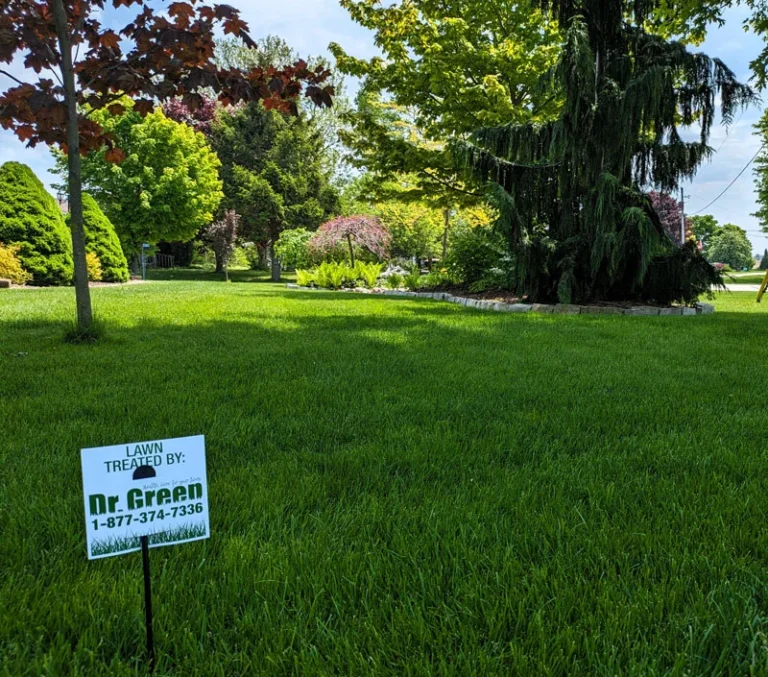
A beautiful, healthy lawn doesn’t happen by accident. Whether you’re dealing with pesky weeds, grubs, or just want a lush,




Additional conditions may apply. Starting price is based on up to 4,000 Sq.Ft. Property size. Cannot be combined with any other offer.
*Free Overseeding is only valid with the purchase and completion of a full program. Must sign up for Prepay or Easy-Pay option. Taxes not included.
Terms & Conditions | Copyright © Dr. Green 2025